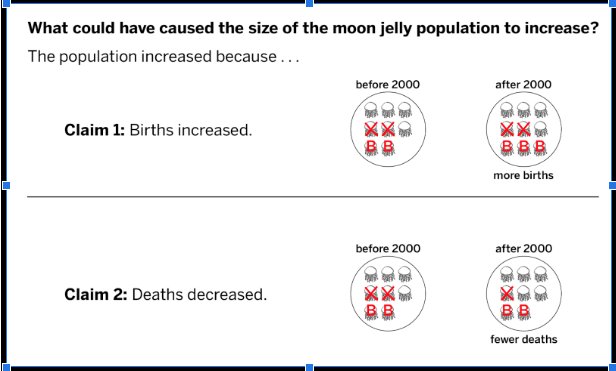
The increase in the moon jelly population could be attributed to various environmental factors aligning favorably. Warmer ocean temperatures and nutrient-rich waters likely contributed to the surge in their numbers. Additionally, a decrease in natural predators could have enabled the moon jellies to thrive unchecked. Understanding what could have caused the size of the moon jelly population to increase is crucial for marine ecosystems’ balance and future conservation efforts.

What Could Have Caused the Size of the Moon Jelly Population to Increase?
Have you ever wondered why there seem to be more moon jellies drifting in the ocean these days? It’s like they’re throwing a never-ending party under the sea! Let’s dive deeper into the mysteries of the moon jelly population explosion and discover what might be causing this surge.
The Role of Food Availability
Imagine you’re a moon jellyfish, peacefully floating in the ocean, minding your own tentacles. One day, you realize there’s an abundance of tiny creatures called zooplankton, your favorite snack, all around you. What would you do? You’d probably invite all your moon jelly friends to join the feast, right?
In recent years, scientists have observed an increase in the population of zooplankton in many oceans. This rise in zooplankton availability could be one of the reasons behind the booming moon jelly population. With a plentiful supply of food, moon jellies have more energy to reproduce and grow their numbers.
Changing Ocean Conditions
Now, picture the ocean as a giant playground for moon jellies. Just like kids love playing in a fun park, moon jellies thrive in certain ocean conditions. But what if the playground starts to change?
Due to factors like climate change and human activities, our oceans are experiencing shifts in temperature and salinity. These changes can create ideal environments for moon jellies to reproduce and survive. Warmer waters, for example, can speed up their growth and development, leading to a larger moon jelly population.
Impact of Pollution
Let’s talk about the not-so-fun part of the story – pollution. Imagine you’re a moon jelly swimming happily when suddenly you get tangled in a piece of plastic waste. Not cool, right? Pollution in the oceans can harm marine life, but surprisingly, moon jellies have a unique talent for thriving in polluted waters.
Some studies suggest that certain pollutants, like nutrients from agricultural runoffs, can benefit moon jellies by increasing the food available to them. While this might sound like a silver lining, it’s essential to remember that pollution poses serious threats to marine ecosystems as a whole.
Predator Prey Dynamics
Every good story has a hero and a villain, right? In the moon jelly’s tale, the hero might be the decreased number of their predators. Just like in a game of hide-and-seek, if there are fewer seekers, it’s easier to stay hidden.
Changes in ocean ecosystems, such as overfishing that reduces the populations of moon jelly predators, can give these gelatinous creatures a competitive edge. With fewer predators around, moon jellies can roam freely, reproduce without fear, and watch their population grow.
Adaptation and Evolution
Now, let’s put on our science hats and explore the fascinating world of adaptation and evolution. Picture this – generations of moon jellies passing down their survival tips to their jelly offspring. Over time, the moon jellies that adapt best to their environment will have more babies, creating a supermoon jelly population.
Through a process called natural selection, moon jellies with traits that help them thrive in changing conditions – such as faster growth rates or resistance to pollutants – are more likely to survive and pass on their genes. This continuous cycle of adaptation and evolution could be powering the rise in the moon jelly population.
In the end, the increase in the size of the moon jelly population is a complex puzzle with many pieces. From food availability and changing ocean conditions to predator-prey dynamics and the wonders of adaptation, various factors could be contributing to the jellyfish takeover of our waters.
As we continue to unravel the mysteries of the oceans and their fascinating inhabitants, let’s remember that every creature, big or small, plays a vital role in maintaining the delicate balance of marine ecosystems. So, next time you spot a moon jelly gliding gracefully in the water, tip your imaginary hat to this wondrous creature and marvel at the secrets it holds beneath the waves.
Populations and Resources Lesson 3.1 Activity 2
Frequently Asked Questions
What factors could have contributed to the increase in the moon jelly population?
The increase in the moon jelly population could be attributed to various factors, such as favorable environmental conditions, availability of prey, and reduced predation pressure from natural predators. Additionally, the reproductive strategy of moon jellies, which involves both sexual and asexual reproduction, may have played a significant role in their population growth.
How does water temperature affect the size of the moon jelly population?
Water temperature can significantly impact the size of the moon jelly population. Warmer temperatures can accelerate the growth and reproduction rates of moon jellies, leading to an increase in their population size. Conversely, colder temperatures may slow down their reproductive processes and limit their population expansion.
Could human activities have contributed to the rise in the moon jelly population?
Human activities, such as pollution and overfishing, can indirectly contribute to the increase in the moon jelly population. For example, pollution from runoff and industrial waste can lead to nutrient enrichment in the water, creating ideal conditions for moon jellies to thrive. Additionally, overfishing of moon jelly predators can disrupt the natural balance, allowing the moon jelly population to grow unchecked.
Final Thoughts
The size of the moon jelly population has significantly increased, likely due to changes in ocean temperature and ecology. Warmer waters may facilitate their breeding and growth rates. Additionally, overfishing of their predators could be contributing to their population surge. Lastly, the availability of ample food sources might be supporting their rapid proliferation. Overall, a combination of environmental factors and ecological shifts could have caused the size of the moon jelly population to increase.