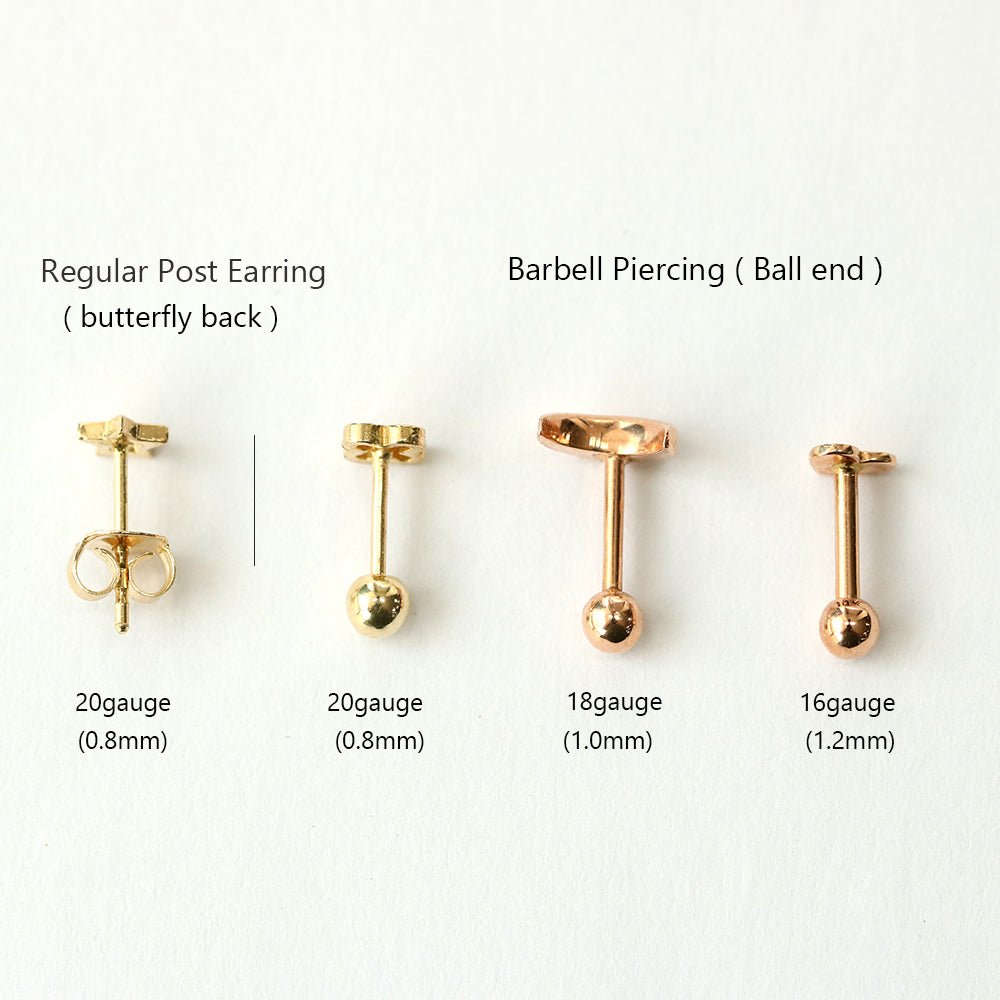
A regular earring typically uses a 20-gauge wire. But what exactly does “20-gauge” mean? To put it simply, the gauge refers to the thickness of the wire used in the earring. Understanding this measurement is crucial for both wearing and making earrings. Let’s delve deeper into the world of earring gauges and discover how to pick the right size for your perfect pair!

What Size Gauge is a Regular Earring: Exploring the Basics
Welcome, curious minds! Have you ever wondered about the size of the tiny metal rod that goes into your ear to hold your favorite earrings in place? Well, you’re in the right place! In this blog post, we’re going to delve into the fascinating world of earring gauges and find out just what size gauge is considered regular for most earrings. So, let’s get started!
The Basics of Earring Gauges
First things first, let’s talk about what an earring gauge actually is. The gauge of an earring refers to the thickness of the metal wire that goes through your earlobe. The lower the gauge number, the thicker the wire. Sounds simple, right?
Common Earring Gauges
So, what size gauge is considered regular for most earrings? The standard earring gauge size is typically 20 gauge. This size is widely used in most earrings, from studs to hoops, making it the go-to choice for many jewelry designers.
Understanding Different Earring Gauges
While 20 gauge is the standard size for regular earrings, it’s essential to know that there are other earring gauge sizes out there. Smaller gauges, like 18 gauge or 16 gauge, are thicker and are commonly used for industrial or statement earrings. On the other hand, larger gauges, such as 22 gauge or 24 gauge, are thinner and are often seen in delicate and dainty earrings.
Choosing the Right Gauge for You
When it comes to picking the perfect earring gauge for you, it ultimately boils down to personal preference. If you have sensitive ears or prefer lightweight earrings, you may opt for a higher gauge number. Conversely, if you like bold and statement pieces, lower gauge numbers would be more suitable.
Exploring Earring Styles and Gauges
Now that we’ve covered the basics of earring gauges, let’s explore how different earring styles can be paired with various gauge sizes.
Studs and 20 Gauge
Studs are a classic choice for everyday wear, and 20 gauge earrings are perfect for this style. The thickness of the 20 gauge wire provides stability and durability, making it ideal for securely holding your favorite stud earrings in place.
Hoops and 18 Gauge
For those who love hoop earrings, 18 gauge is a popular choice. The slightly thicker wire of 18 gauge hoops adds a bold and stylish touch to your look, making a statement without being too heavy on your ears.
Dangles and 22 Gauge
If you’re a fan of dangle earrings, you might want to consider 22 gauge for a delicate and elegant vibe. The thinner wire of 22 gauge allows for intricate designs and lightweight dangles that sway gracefully with your every move.
And there you have it! The world of earring gauges may seem small, but it’s full of exciting possibilities. Whether you prefer a standard 20 gauge for your everyday studs or like to experiment with different sizes for various styles, understanding earring gauges can help you make informed choices when it comes to your jewelry collection. So, next time you slip on your favorite pair of earrings, take a moment to appreciate the tiny but mighty earring gauge that keeps them in place!
Thanks for joining us on this earring adventure. Until next time, keep sparkling and shining bright with your perfectly sized earrings!
How Ear Gauges Can Tear Your Ears 👂
Frequently Asked Questions
What size gauge is typically used for regular earrings?
Regular earrings usually have a standard gauge size of 20G or 18G. These sizes are commonly used for most earring styles, making them comfortable and suitable for everyday wear.
Is it possible to find regular earrings in sizes other than 20G or 18G?
While 20G and 18G are the most common sizes for regular earrings, some earrings may be available in slightly different gauges. However, it is essential to ensure that the earrings you choose are compatible with your piercings to avoid discomfort or irritation.
What should I consider when choosing the gauge size for my regular earrings?
When selecting the gauge size for regular earrings, consider the thickness of your earlobes and personal comfort preferences. Thicker gauges like 18G may be more durable but could be uncomfortable for some individuals, while thinner gauges like 20G offer flexibility and comfort.
Are there any exceptions to the typical gauge sizes for regular earrings?
In some cases, especially with custom-made or specialized earrings, you may come across gauge sizes that deviate from the standard 20G or 18G. It is essential to communicate any specific size requirements with the jeweler or manufacturer to ensure the earrings fit your piercings correctly.
Final Thoughts
A regular earring typically has a gauge size of 20G or 18G. This standard size ensures compatibility with most ear piercings. Understanding what size gauge is a regular earring is essential for selecting the right jewelry. Remember, when buying earrings, check the gauge size to ensure a comfortable fit.