The Sherpa Way: The Route Up the Himalayas Is More Than a PathWay of Life Trekking from Gokyo to Everest Base Camp with Sherpas offers you visit more than a popular place or cover some terrain — it’s an opportunity to see the heart of an area through the eyes and tales of the folks who have inhabited these mountains for generations. Every village, every stupa, and every prayer flag flapping in the wind is, in some way, a part of the Sherpa legacy, its culture is one that is in line with the land and inextricably tied to the mountain range that made them.
Everest Base Camp Walking the quiet trails of the Gokyo Valley, your Sherpa guide tells you stories of their ancestors, of how these paths were lifelines between settlements and monasteries long before tourism came calling. Sacred to Buddhists and Hindus alike, the glimmering Gokyo Lakes emanate a spiritual energy that the Sherpas respect and revere. Scaling Gokyo Ri or traversing the Cho La Pass becomes as much a test of strength as it is a rite of passage — shepherded and guided by those whose relationship with the mountains is as much a spiritual one as it is practical.
In villages from which they pass, you see the patterns of Sherpa life—yak herding, prayer rituals, and that warm hospitality that appears to flow from every house. Arriving at Everest Base Camp with Sherpas is arriving with deeper knowledge, not only of the land but the spirit that covers it. The Sherpa Way is about relation, to ground, to culture, to the calm strength in the people who guide you through it.
Sherpa Way: Introduction
Trekking in the Himalayas is not just about the mountains, it’s about the people who live in them. The Sherpa way of life — what actually makes up the essence of this experience — of endurance, spirituality, hospitality, and respect for nature. To tread the path of the Sherpa people is to gain something beyond altitude — it’s to gain an understanding of a centuries-old culture founded on balance and resilience.
Mountains define the Sherpa way. The Sherpa people of Nepal’s Solukhumbu region have adapted both physically and spiritually to the harsh yet majestic environment in which they live at high elevations. Their life is steeped in community, family, and an abiding Buddhist faith that touches all of daily life, from prayer flags snapping in the breeze to mani stones etched with sacred mantras lining the paths.
Understanding the Sherpa way for trekkers means knowing that this isn’t only about being able to summit Everest Base Camp or Gokyo Lakes, instead, but it’s about walking with humility and gratitude. It’s about listening to the wisdom of your Sherpa guide, paying attention to local customs, and participating in a rhythm of life that has persisted for generations.
To enter into the Sherpa way is to move beyond sightseeing and into a more profound relationship with the Himalayas — one where each path, person and peak speaks to something meaningful. It is this perspective that makes a trek a transformational cultural experience.
Understanding Sherpa Heritage
Everest Base Camp Trek “What a great heritage it is — as timeless and majestic as the mountains themselves. The Sherpa people; who trace their ancestry back to eastern Tibet, migrated to the highlands of Nepal more than 500 years ago and are now known as living high up in the mountains, in Solukhumbu region. Over the ages, their culture grew to be in sync with the harsh Himalayan topography, producing a legacy of endurance, devotion, and close-knit community.
You train based on good data till December 2023. Monasteries, chortens, and prayer flags scatter the landscape, serving as spiritual way stations along trekking routes. These symbols are not just identifiable; they are practiced daily. Hindu festivals, followed by many others, like Mani Rimdu, and other religious festivals are celebrated in many forms, including community gatherings, prayer, and traditional dance. Many ancient rituals, passed down the generations by word of mouth, are enacted to invite blessings and protection from the mountain gods.
The Sherpa language called “Solu Sherpa” is similar but also very much its own, with Tibetan influences. Despite many Sherpas now speaking both Nepali and English as a result of trekking tourism, their native tongue and oral tradition are considered critical in maintaining their culture.
Sherpa architecture, food, and clothing are also adapted to life in the mountains. Houses are constructed with stone to cope with brutal winter, food relies on energy-dense food, such as “dal bhat” and “tsampa,” and traditional dresses serve more than fashion, exchanging function and symbolism.
Appreciating Sherpa heritage enriches your trek exponentially. It challenges you to look past the picturesque views and the smiling faces and understand that every spinning prayer wheel and stone village is part of a living culture — one that has flourished in the shadows of the world’s tallest mountains for centuries.
Starting the Journey in Lukla
Everest Base Camp Treks Flying to Lukla is one of the most thrilling travel experiences, kicking off the journey into the center of the Himalayas. Lukla’s Tenzing-Hillary Airport, at 2,845 meters (9,334 feet), is rated as one of the most exciting airstrips in the world, with a short runway located at the top of a steep cliff. This dramatic entrance sets the tone for the epic adventure that ensues.
The landscape incenter the chaos of Kathmandu, immediately transitions to alpine at the landing. Lukla, built into a field of pine forests, prayer flags , and jagged peaks, is the gateway to the Everest region — and the beginning of a trek not just across mountains but also through the heart of Sherpa life.
Lit up with lodges, cafés, gear shops, and local homes, Lukla is a vibrant village in and of itself. Porters sort loads, guides inspect gear and trekkers sip tea before stepping up their first steps onto the trail. Taking an overall easier introduction to trekking life following the Dudh Koshi River, the first part of the trek heads downhill to Phakding.
The air is crisp, the rhythm is predictable and anticipation lingers with every footfall. The landscape is punctuated by small villages and Buddhist symbols, and early exchanges with locals provide a glimpse into the warmth and hospitality ahead.
Starting the trek at Lukla is also symbolic — it’s the point at which you embrace the timeless range of the Himalayas and the ageless rhythms of life in its valleys, kept alive with the indomitable spirit of the Sherpas.
Trek to Namche Bazaar
The walk to Namche Bazaar is almost a rite of passage in the Himalayas, a signal that you’re entering into bigger altitudes but even more so into Sherpa land. The trail from Lukla passes through thriving forests, over suspension bridges, and along the glacial Dudh Koshi River. The real ascension begins after spending a night in Phakding to acclimatize slowly to the height.
The trek from Phakding to Namche is very hard and rewarding in terms of views. You’ll pass through Monjo, the entrance to Sagarmatha (Mt. Everest) National Park, and climb steadily through pine-covered hills and dramatic gorges. Crossing the Hillary Suspension Bridge high above the river decorated with fluttering prayer flags is one of the best-known moments of this trek.
As the trail steepens, the air thins out — but views become increasingly rewarding. If it is a clear day, you might spot Everest for the first time in the distance. Build up to Namche Bazaar — a lively Sherpa village located in a natural amphitheater at 3,440 meters (11,286 feet).
Trek to Base Camp Mount Everest Namche is more than a way station; it’s the cultural and economic center of the Khumbu region. With cozy tea houses, bakeries, shops, and even a Saturday market, it’s the perfect place to rest, acclimatize , and immerse yourself in local life.
This trek is more than a climb — it’s a rite of passage. Reaching Namche is like turning from visitor to proper Himalayan traveler, as the mountains and Sherpa spirit fully receive you into their midst.
A Day in the Life of a Sherpa in Namche
The heart of Sherpa’s life begins at Namche Bazaar. Perched high in the Himalayas at 3,440 meters (11,286 feet), this busy mountain town serves as more than merely an acclimatization pit stop; it’s the cultural heart of the Khumbu region and a living testament to Sherpa resilience, community and tradition.
You can wander the winding stone streets of Namche as its traditional homes sit next to trekking lodges, small markets bursting with local crafts and Buddhist prayer wheels turning softly in the wind. Life here is peaceful yet purposeful, and the hospitality of the Sherpa shines with every smile and cup of tea.
A trip to the Sherpa Culture Museum provides additional context about their mountaineering history and way of life. Nearby, the Namche Monastery offers silent contemplation amid colorful murals and ancient chants resonating in the corridors.
If you time your visit wisely, you might get to experience a local festival or ceremony, where dances and songs are performed in prayer, and community is at the center. Sherpa hospitality is a highlight too — you’ll be welcomed like family into tea houses, served hearty meals, and offered tales passed down through the generations.
In Namche, experiencing Sherpa life isn’t just about observing it — it’s about participating in it. Whether that means sharing a laugh with your guide, learning a few Sherpa words or attending a morning puja (prayer), those moments become the heart of your trip. In Namche, culture and connection converge, leaving marks as indelible as the neighboring mountains.
Sacred Trails to Gokyo Valley
Trekking to Gokyo Valley is not just a route through beautiful alpine terrain; the trails are also sacred paths through the spiritual and cultural backbone of the Sherpa people. Past Sanasa, where the main Everest Base Camp route leaves the civilization behind, the trail heads north and west toward Dole and Machhermo, and a quieter, reflective journey begins.
Everest Base Camp Trek Cost This less-frequented route leads through rhododendron forests, by yak herders’ settlements, and beside roaring glacial streams. Every step is imbued with natural beauty and cultural significance. You’ll also pass mani stones, prayer flags, and remote chortens, reminders of the deeply spiritual landscape you’re traversing.
The Gokyo Valley is home to the sacred Gokyo Lakes, a series of turquoise, glacier-fed lakes that are considered holy by both Hindus and Buddhists. These lakes are visited by pilgrims at special festivals, who believe that gods live here. The tranquility of the valley, with its mirrored lakes and snow-clad ridges, is truly moving.
Not very far from the third lake is Gokyo village, an idyllic place set against a backdrop of formidable peaks. A hike up to Gokyo Ri (5,357 meters) offers one of the most panoramic views in the whole Everest region—including Everest, Lhotse, Makalu, and Cho Oyu.
Walking these sacred trails isn’t merely a trek—it’s a pilgrimage. The serene beauty and spiritual power of Gokyo Valley leave an impression that lasts long after you reach home.
Gokyo Lakes Spiritual Educator Reflection
The Gokyo Lakes aren’t just stunning glacial lakes found in the Himalayan mountains; they’re holy sites imbued with spiritual significance for the Sherpa people and other residents who call this remote region of Nepal home. As you enter the Gokyo Valley, the serene splendor of these high-altitude lakes beckons for quiet reflection. The third lake, Dudh Pokhari, is located right next to the small village of Gokyo, providing a place for meditation and reflection. Not only does its mirror-like surface reflect the surrounding mountains, it reflects an indefinable sense of stillness and peace that is hard to find elsewhere. These lakes are considered sacred by the Sherpas and pilgrims come here during certain parts of the year to offer prayers. For us as trekkers, observing this spiritual respect towards the surroundings gets our hearts open to a different comprehension of nature and its divinity, akin to the fragrances of rock, water ripples, and blew. Whether you’re walking the shore, observing the clouds change above the turquoise water, or simply breathing in the quiet, Gokyo Lakes provide more than a scenic interlude: they provide a spiritual intermission. It’s a place of connection not only with the mountains but with oneself, within the sacred that generations of Sherpas have long revered.
Gokyo Ri: A Cultural Statement in Its Own Right
Mount Everest Base Camp Trek The ascent up Gokyo Ri is often viewed as a physical challenge, a feat with tangible results for those who emulate the Sherpas and those who guide passing climbers. As the sun prepares to return on the other side of the ridge, the climb grows less a pilgrimage toward a postcard panoramic and more a spiritual quest. Gokyo Ri, which ascends to 5,357 meters, bestows trekkers with panoramic vistas of Everest, Lhotse, Makalu, and Cho Oyu, but the summit is also the realm of flapping wind-swept prayer flags, bearing mantras and aspirations into the ether. For Sherpas, the mountains are not mere scenery, they are living gods, and to stand on top of Gokyo Ri is not to admire — it’s to acknowledge, thank, and connect with a higher power. The ascent, usually undertaken in silence, is a metaphor for contemplation. You may hear legends or hushed prayers from your Sherpa guide, adding to the significance of every step. When the sun rises and gilds the Himalayan giants, it’s not just a visual instant; it’s a moment of reverence. Many trekkers end up weeping, not only from beauty but from the energy of the place and the company of those who know it best. Under the watchful eyes of Sherpas, Gokyo Ri symbolizes understanding between human endeavor and nature’s majesty, a climbing experience that lifts one’s body and soul alike.
Into the Wild: Cho La Bridge crossing
The thrill of crossing the Cho La Pass is, indeed, a high-altitude adventure, if experienced through the Sherta perspective, it also has a deep cultural resonance. At 5,420 meters, this icy, windswept pass is one of the hardest sections of the Gokyo-Everest trek, demanding strength, patience, and concentration. But with the help of Sherpa guides the crossing becomes more than a hurdle; it’s a symbolic journey between sacred valleys. These mountain veterans don’t just conquer the technical landscape — they lead it with wisdom passed down from generation to generation, weaving together safety and spirituality. And along the way they will often spend a moment at places of significance to say a few prayers, making tangible links between the physical and spiritual worlds. For the Sherpas, mountains dawn personified, and Cho La is more than a physical link between Gokyo and the Khumbu — it’s one of transition, a bridge through energies, a pass-through experience. The quiet strength of your Sherpa guide comforts you as you climb across glacial rock and snowfields, and the stillness of the mountains is conducive to reflection. Making it to the top, festooned with colorful prayer flags flapping in the wind, is a moment of triumph—but also a moment of humility. You understand that you are part of something much bigger than the self: a land, a culture, an approach to navigating the world that draws heavily both on tradition and on the natural world.
Arrival at Everest Base Camp
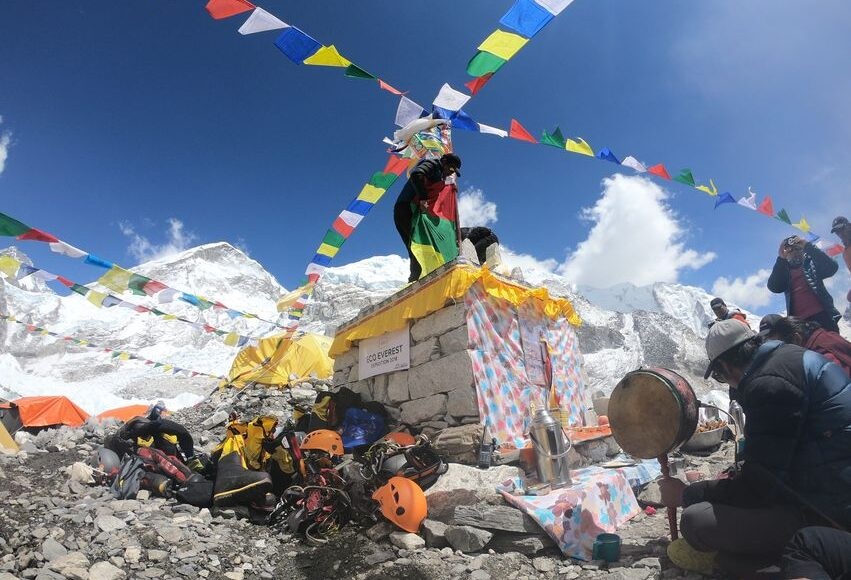
Arriving at Everest Base Camp is an incredible footstep along the way, but with a Sherpa guide it’s not just a place on the map, it’s a moment of profound cultural and emotional connection. Located at 5,364 meters, Base Camp is an iconic place where ambition, endurance, and nature meet. It is the base for climbers headed to the summit, and the finish line for trekkers who have crossed valleys, glaciers, and high passes to reach it. What makes going here with a Sherpa guide special is the attitude he brings. They don’t consider Base Camp a mere famous location: They treat Base Camp as sacred ground, a place of memory, respect, and reverence. For many Sherpas, this is where family members, friends, or even themselves have stood before undertaking the perilous ascent to the summit. Their unseen stories and personal histories lend heft to the cold winds and rocky kis ki, at Paha Sapa. Ahead looms the colossal Khumbu Icefall, a grim marker for the mountain’s raw force, while Everest itself remains out of sight, as if to suggest that there are those who should not be conquered, but respected. To stand at Base Camp is to look back on your own adventure, a moment when – like all the climbers who attempted the summit before you – heart and mind finally synchronize in the shadow of the planet’s highest mountain.
The Symbolism of Kala Patthar
Everest Base Camps kala Patthar transcends being a viewpoint — it’s a symbolic summit, a place where the spiritual and the physical elements of the trek intertwine in a moment of spiritual clarity. Soaring to 5,545 meters, it’s the highest that most trekkers get and the clearest, closest view that most trekkers will have of the summit of Mount Everest. But the ascent to Kala Patthar is not just framed as a photo opportunity, but a deeply symbolic pilgrimage under Sherpa guidance. The early-morning climb in darkness symbolizes inner exploration — the meditative approach to knowledge, reason, humility, and reverence of God’s majesty. As the sun rises and golden light fills Everest, Lhotse, and Nuptse, the quiet is louder than any words. Your guide may share a prayer or place a stone at a cairn quietly — both a simple and powerful act of reverence drawn from Himalayan tradition. Kala Patthar serves as a metaphor for perspective. It proves that even if you don’t make it to the tip-top of Everest, you can still be awed and inspired by its grandeur, its light, and its enormity. The sea below becomes more than a landscape and more than a postcard; it is a reminder of humility, respect, and success as defined by presence alone.
So Long to the Land of the Sherpas
The system takes some time to acclimate to because it can be emotional to bid farewell to the land of the Sherpas. As the trail winds down, and the rocky peaks recede behind you, there is a different trilling inside your heart. The physical demands of the trek fade as the days progress with reflection on the connections you’ve made —with the mountains, the culture, and your Sherpa guides — with profound meaning. The warm smiles of villagers, the clang of yak bells in the distance, the simple power of shared tea in a stone teahouse — Himalayan Base Camp Trek all such moments linger. Your so-called Sherpas, your guides the men who used to go ahead of you, paving the way up steep mountain paths and across an icy pass, no longer walk ahead of you but alongside you, with stories and laughter and a calm that comes from a lifetime lived in communion with the mountains. You know now that this journey was never solely about reaching Base Camp or scaling peaks, it was about witnessing the world with the Sherpa vision. Their combination of strength and humility, their spiritual respect for nature, and their deep-seated kindness have transformed how you think about adventure itself. Hiking out of the Khumbu Valley, your farewell is not to a place, but to a way of life, one that now resides within you.